
How Long Does It Take to Build a Website? An Honest Timeline
A practical website development timeline for business sites, online stores, and custom web apps, including the delays clients and developers can prevent.

A focused business website commonly takes two to four weeks to build. A customized company website often needs four to eight weeks, while an e-commerce website may take six to twelve weeks or longer. A custom web application can take three to six months, and complex platforms can take longer. Those ranges are more useful than promising that every website will be finished in a certain number of days. The real schedule depends on what must be designed, written, developed, connected, reviewed, and tested before the site is ready for actual customers.
A Quick Website Development Timeline
When someone asks me how long a website takes, I understand why they want one clear number. A business may be planning a launch, preparing advertisements, ordering packaging, or trying to replace a site that is already causing problems. The date matters.
The most honest starting point is a range based on the type of project. These are general planning estimates, not fixed promises for every website.
- Simple landing page: about one to two weeks when the copy, branding, images, and requirements are ready.
- Focused business website: about two to four weeks for a small site with standard pages and a contact form.
- Customized company website: about four to eight weeks when the project needs original layouts, stronger content structure, technical SEO, analytics, and several page types.
- E-commerce website: about six to twelve weeks or longer, depending on the catalog, payments, shipping, subscriptions, migration, and integrations.
- Custom web application: about three to six months or longer when the product includes accounts, permissions, databases, dashboards, payments, or complex business rules.
The Timeline Starts Before the First Page Is Coded
A website can look simple when you only count the pages. A five-page site might sound like five separate tasks: Home, About, Services, Blog, and Contact. In practice, each page depends on decisions that affect the others.
Before development begins, someone has to clarify who the site is for, what visitors should do, what content already exists, which pages are needed, and which features are essential for launch. The navigation, calls to action, forms, search structure, and mobile experience all come from those decisions.
Skipping this work can make the first week look fast, but the uncertainty usually returns later as revisions. I would rather spend time understanding the problem early than build the wrong thing quickly and rebuild it near the deadline.
What Usually Happens During a Business Website Project
The phases are not always completely separate. Content, design, and development can overlap when the team has enough information to keep moving. Still, a typical business website usually passes through the following work.
- Discovery and scope: goals, audience, pages, features, responsibilities, technical requirements, and launch criteria.
- Content preparation: page copy, images, product or service details, contact information, legal text, and search topics.
- Structure and design: sitemap, navigation, page hierarchy, wireframes, visual direction, responsive layouts, and reusable components.
- Development: templates, content management, forms, integrations, analytics, redirects, and any custom functionality.
- Quality checks: mobile and browser testing, accessibility basics, performance, metadata, structured data, links, forms, and tracking.
- Review and launch: final approval, domain and hosting setup, production checks, handover, and post-launch monitoring.

Content Is Often the Real Schedule
Code is not always the part that holds up a website. A developer can build a service-page template, but the page still cannot be finished without the service name, explanation, images, price or quotation process, and the action a visitor should take.
Placeholder text helps us test a layout, but it cannot reveal whether the final headline wraps badly, whether a section needs more space, or whether two services sound almost identical. Real content affects design, search visibility, accessibility, and conversion.
The smoothest projects usually begin with approved or nearly complete content. If the content still needs to be written, that work should appear in the schedule instead of being treated as something that will somehow happen between development tasks.
Custom Features Change More Than the Coding Time
A booking form, payment flow, customer account, product filter, multilingual setup, CRM connection, or delivery integration adds development work. It also adds decisions, testing, error handling, account access, and dependence on another platform.
For example, connecting a form to a CRM is not finished just because the form submits. The field mapping, validation, consent text, notifications, duplicate handling, failure behavior, and real lead flow must also be checked.
This is why two websites with the same number of pages can have very different schedules. Page count is visible, but the systems behind those pages often determine the actual effort.
Feedback Can Keep a Project Moving or Stop It
A review round is useful when the feedback is clear and comes from the people responsible for the decision. It becomes difficult when comments arrive in different chats, contradict each other, or introduce a new direction after several pages have already been built.
Good feedback does not mean approving everything. It means identifying what is wrong, explaining why it does not work for the business or audience, and collecting the decision in one place. That gives the developer something specific to solve.
It also helps to agree on review windows. If a two-day review takes two weeks, the launch date has moved even though no development task became more difficult.
Can a Website Be Built in One Week?
Yes, some websites can. A focused landing page or small template-led site can be completed quickly when the scope is small, the content is final, the brand assets are ready, and the decision-makers are available.
The problem is treating one week as a normal promise for every project. Compressing the schedule does not remove the work. It reduces the time available for planning, content review, responsive design, testing, accessibility, performance, and the unexpected issues that appear when real systems are connected.
A fast launch can be the right business decision. If speed is the priority, the safer approach is to reduce the first release to what is genuinely needed and schedule lower-priority additions after launch. Cutting the scope is usually more reliable than pretending a large scope has become small.
What Clients Can Prepare to Avoid Preventable Delays
A client does not need to arrive with a perfect technical brief. A good developer should help turn business needs into a workable scope. However, a few prepared items can save days or weeks.
- A clear description of the business, audience, services, and main goal of the website.
- A list of required pages and features, with a separate list of ideas that can wait until a later release.
- Approved logo files, brand colors, fonts, photographs, product details, and contact information.
- Draft or final page copy, plus one person responsible for content approval.
- Access to the domain, hosting, analytics, email platform, payment provider, CRM, or other services that must be connected.
- Examples of websites you find useful, with an explanation of what you like instead of a request to copy them.
- One clear decision process and realistic response times for review rounds.
Testing Is Part of Building the Website
A page displaying correctly on one laptop does not mean the website is ready. It still needs to work on phones, tablets, different screen sizes, current browsers, slower connections, and with keyboard navigation where applicable.
Forms must reach the right destination. Links and redirects must work. Metadata, structured data, analytics, indexing settings, image text alternatives, performance, and security-related configuration need attention before and after launch.
Google's guidance encourages useful, well-organized content and a good overall page experience. Those qualities are not added by installing an SEO plugin at the end. They depend on decisions made throughout the project.
How I Estimate a Website Timeline
I do not begin with a deadline and force every project into it. I first look at the number of unique page types, the state of the content, the design work, the required functionality, the platforms being connected, the review process, and the checks needed for a responsible launch.
I also separate the first useful release from everything the website might eventually become. That makes it easier to protect the launch from optional ideas while keeping a clear path for future improvements.
The result is still an estimate because projects involve people, third-party services, and decisions that can change. A useful estimate makes those assumptions visible. It should tell both sides what must happen for the target date to remain realistic.
The Best Timeline Is One You Can Explain
A website should not take months simply because web projects are mysterious. It should take the time required by a clear scope, real content, thoughtful design, dependable development, useful feedback, and proper testing.
For a small business website, two to four weeks is often a sensible starting range. For custom websites, online stores, and applications, the schedule grows with the decisions and systems involved.
If someone gives you a launch date, ask what the estimate assumes, what is included, what you need to provide, and what could move the schedule. A timeline becomes trustworthy when everyone understands what it is built on.
Verified references
Sources & Methodology
The timelines in this article are Conduit Code Labs editorial planning ranges informed by Wayne Pastoral's hands-on website development experience. They are general estimates, not guaranteed delivery times or fixed quotations. Every project should be scheduled from its actual scope, content, dependencies, and review process.
- Creating Helpful, Reliable, People-First ContentGoogle Search Central: Official guidance on clear authorship, first-hand expertise, useful content, and creating primarily for people.
- Understanding Page Experience in Google Search ResultsGoogle Search Central: Official guidance on mobile usability, Core Web Vitals, secure delivery, and the overall experience of a page.
Clear answers before you plan
Frequently Asked Questions
How long does it take to build a five-page website?
A focused five-page business website commonly takes about two to four weeks when the copy, images, branding, and requirements are ready. Custom design, content writing, integrations, or slow review rounds can extend the schedule.
Can a professional website be built in one week?
A simple landing page or small template-led website can sometimes be completed in one week when the scope and content are ready. Larger projects usually need more time for planning, design, responsive development, testing, accessibility, performance, and feedback.
How long does an e-commerce website take to build?
A focused e-commerce website often takes six to twelve weeks. A large catalog, product migration, subscriptions, custom checkout rules, payment or shipping configuration, and business-system integrations can make the project take longer.
What causes the most common website development delays?
Common delays include incomplete content, changing requirements, scattered or late feedback, missing account access, unplanned integrations, product-data problems, and third-party approval or configuration issues.
How can a business make its website launch faster?
Finalize the essential scope, prepare content and brand assets early, choose one decision-maker, provide required account access, agree on review dates, and move optional features into a later release instead of adding them during development.
A practical next step
Planning a website launch?
Share the pages, features, content, and target date you have in mind. We can help turn them into a realistic scope and timeline.

About the author
Wayne Pastoral
Full-stack developer behind Conduit Code Labs, working across Shopify, WordPress, web applications, performance, accessibility, and integrations.
Learn more about WayneContinue reading
More from Web Development

Website Uptime Is Not Enough: What Businesses Should Monitor After Launch
Uptime is only the first check. Learn how to monitor forms, checkout, performance, analytics, SEO, accessibility, integrations, and other critical website journeys.
Read article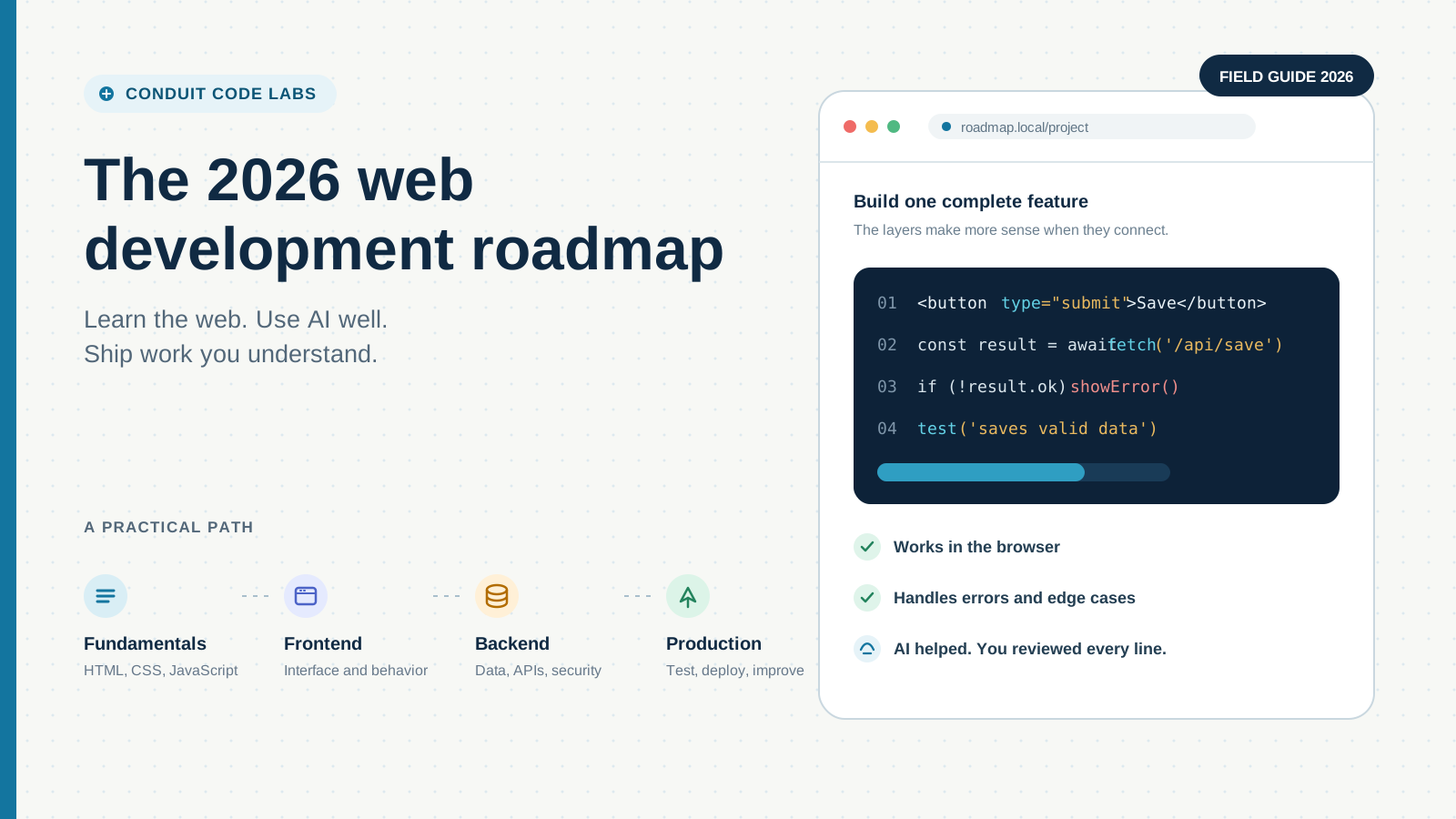
2026 Web Development Roadmap: What to Learn in the Age of AI
Learn frontend, backend, full-stack, design, and AI tools in a practical 2026 web development roadmap built around real projects and strong fundamentals.
Read article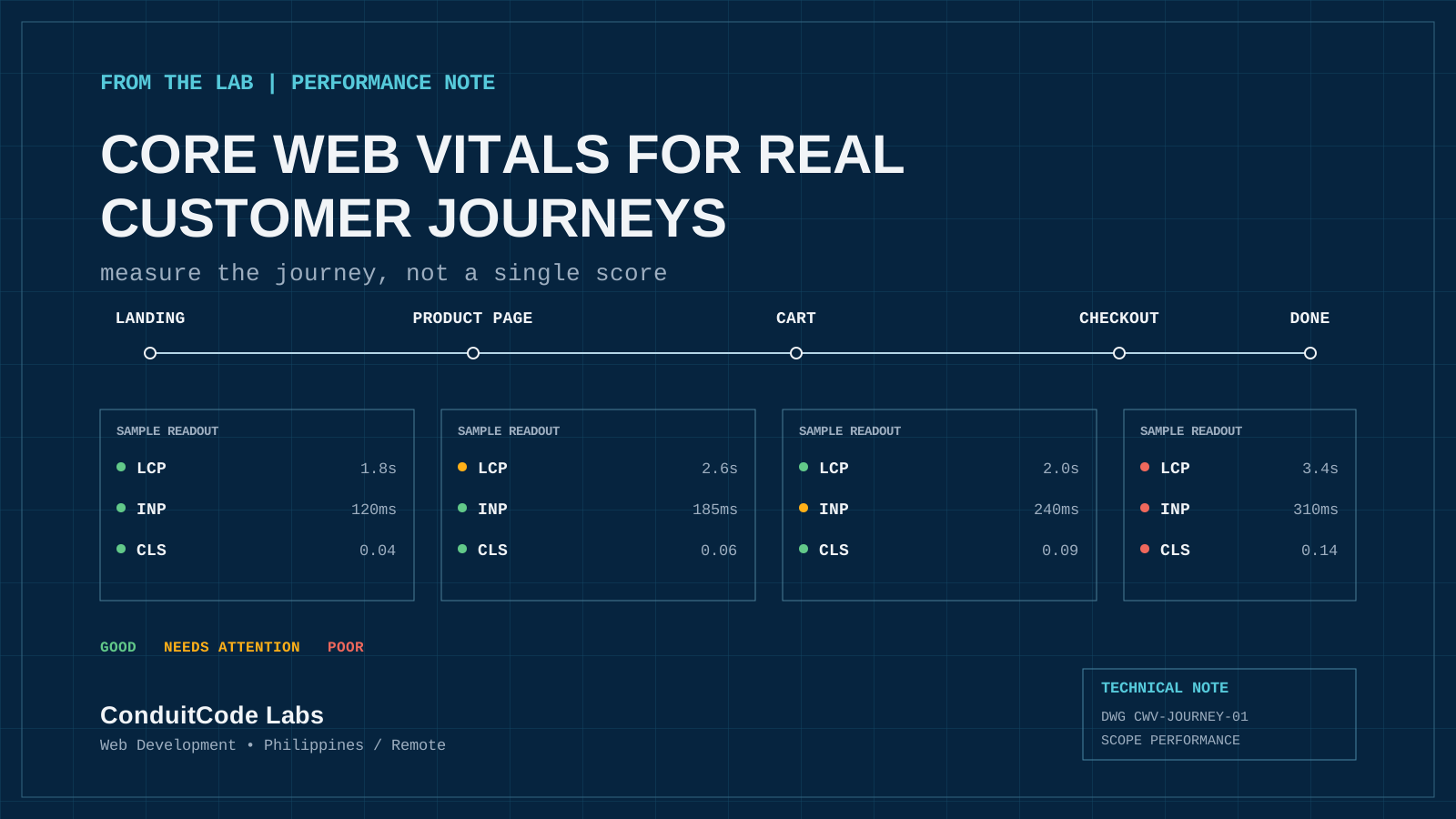
Core Web Vitals for Real Customer Journeys
A practical way to improve loading, interaction, and stability around the pages customers actually use.
Read article