
Core Web Vitals for Real Customer Journeys
A practical way to improve loading, interaction, and stability around the pages customers actually use.
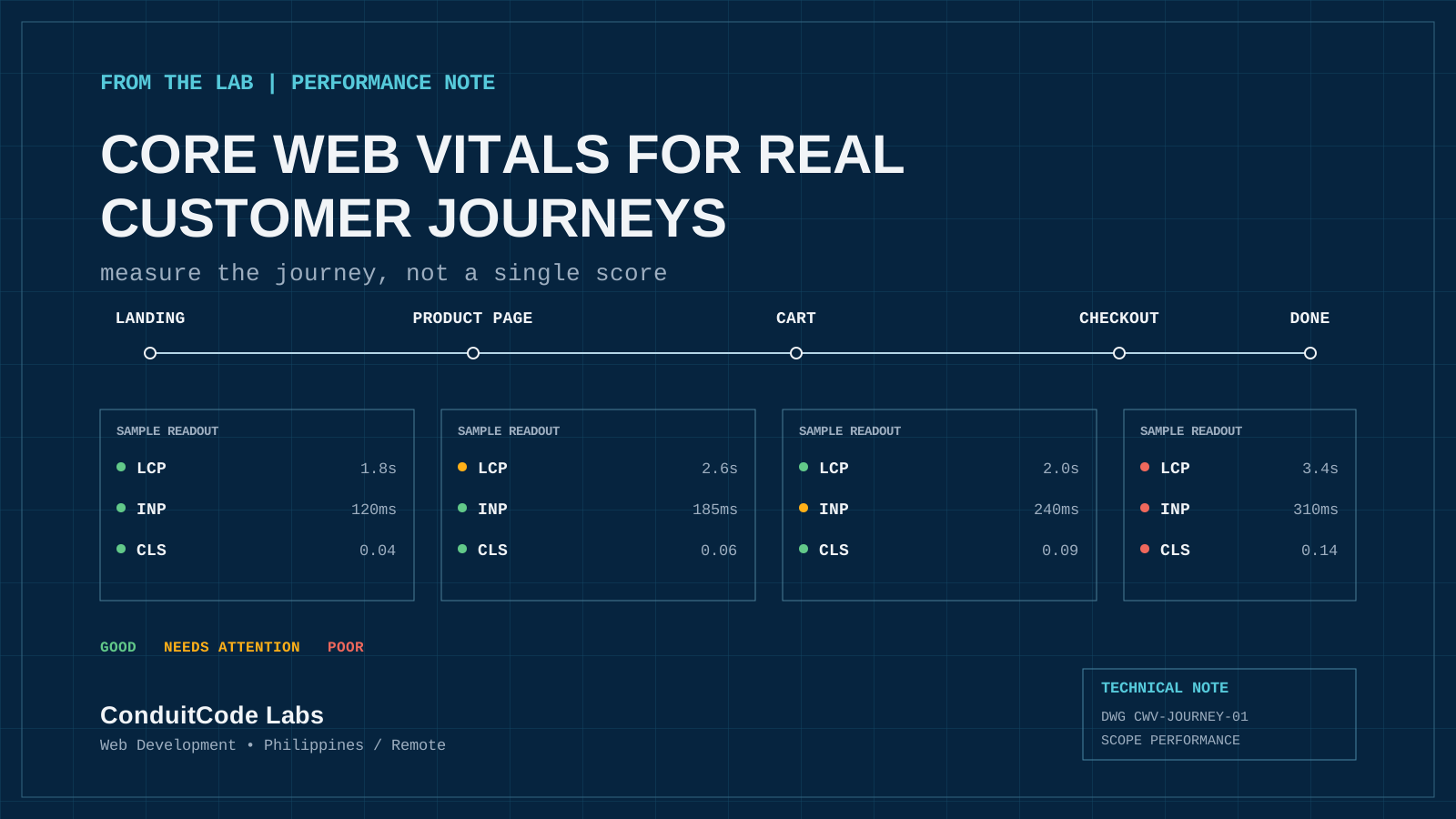
Core Web Vitals are useful when they lead to a better customer journey. They are much less useful as a detached score chased without knowing which page, device, or interaction is actually slow.
Measure a journey, not a score
Start with a real route: landing page to product page, article to inquiry, or cart to checkout. Field data for that route tells a different story from a single lab run on the homepage.
Largest Contentful Paint measures how long the main content takes to appear. Interaction to Next Paint measures how quickly the page responds after a customer clicks or taps. Cumulative Layout Shift measures how much the page moves while loading.
Segment by template and device before drawing a conclusion. A fast collection page does not cancel out a slow product page on mid-range mobile hardware.
Measure the path that matters, fix its limiting resource, and verify the change under realistic conditions.
Fix the limiting resource
LCP often improves when the primary image, font, and server response stop competing for the same bandwidth. On product pages, oversized hero media is a common bottleneck.
INP improves when long JavaScript tasks are broken up or removed. Cart and checkout experiences often suffer when too much validation or analytics work runs synchronously.
CLS improves when media, banners, cookie notices, and injected UI reserve their space before loading.
Treat each metric as evidence about a bottleneck, not a target to chase directly. Avoid broad rewrites until the limiting resource is clear.
Verify under real constraints
Re-test the exact template, viewport, and interaction that motivated the change, then compare field data after enough traffic has accumulated.
Before calling the work complete, confirm it still holds up on realistic hardware, a constrained connection, and the specific template the change touched.
Where to spend the effort first
Not every page deserves equal attention. Start with templates carrying the most traffic or revenue, then work outward. Performance work is complete when the page feels better for the customer and the improvement survives normal content and merchandising updates.
Verified references
Sources & Methodology
Metric definitions and thresholds follow Google's official Web Vitals documentation. Field results should be interpreted by page type, device, traffic, and customer journey.
- Web VitalsGoogle web.dev: Official overview of the Core Web Vitals and their measurement guidance.
- Largest Contentful PaintGoogle web.dev: Official LCP definition, thresholds, and measurement guidance.
- Interaction to Next PaintGoogle web.dev: Official INP definition, thresholds, and measurement guidance.
- Cumulative Layout ShiftGoogle web.dev: Official CLS definition, thresholds, and measurement guidance.
A practical next step
Have a project that needs to work better?
Share the goal, the current problem, and what success should look like. Conduit Code Labs can help define a practical next step.

About the author
Wayne Pastoral
Full-stack developer behind Conduit Code Labs, working across Shopify, WordPress, web applications, performance, accessibility, and integrations.
Learn more about WayneContinue reading
More from Web Development

Website Uptime Is Not Enough: What Businesses Should Monitor After Launch
Uptime is only the first check. Learn how to monitor forms, checkout, performance, analytics, SEO, accessibility, integrations, and other critical website journeys.
Read article
How Long Does It Take to Build a Website? An Honest Timeline
A practical website development timeline for business sites, online stores, and custom web apps, including the delays clients and developers can prevent.
Read article
2026 Web Development Roadmap: What to Learn in the Age of AI
Learn frontend, backend, full-stack, design, and AI tools in a practical 2026 web development roadmap built around real projects and strong fundamentals.
Read article