
Europe’s Supermarket Fridge Hacks: When Cyberattacks Spoil Food
An educational look at Europe’s 2026 supermarket fridge cyberattacks, how connected refrigeration controls work, and the security lessons for businesses.
A cyberattack can reach beyond a screen. On November 2, 2026, attacks on supermarket refrigeration systems across Europe raised fridge and freezer temperatures, forcing affected stores to discard food. The story offers a practical introduction to operational technology: software and connected equipment that influence what happens in the physical world.
What Happened in Europe?
Reuters reported on November 3 that a fresh wave of attacks had affected stores in multiple European countries, following refrigeration attacks in France in October. Retailers were reviewing their networks, updating equipment, and in some cases disconnecting refrigeration systems from the internet. The confirmed impact included lost stock and disruption to normal operations.
Official notices provide a firmer technical foundation than the most dramatic headlines. France’s CERT-FR had already issued an alert in October. Sweden acknowledged the November incidents, and Ireland published specific advice for operators of remotely accessible refrigeration controllers.
| Date | Confirmed notice |
|---|---|
| October 12, 2026 | CERT-FR published its refrigeration controller alert; recommendations were updated on October 16. |
| November 2, 2026 | Sweden’s NCSC announced that it was following incidents affecting connected refrigeration systems. |
| November 3, 2026 | Swedish public information confirmed raised temperatures; Ireland’s NCSC issued a controller security advisory. |
Why Would a Supermarket Freezer Have an Internet Connection?
Connected control systems let operators and service providers monitor equipment and carry out some administration remotely. A contractor can investigate a problem without starting every diagnosis with a site visit. The joint Secure Connectivity Principles for Operational Technology guide recognises these benefits while explaining the additional risks connectivity introduces.
The useful distinction is between observing a system and controlling it. A temperature reading reports a condition. A management interface may also allow an authorised person to change how equipment behaves. Protecting that authority matters because an unwanted change can affect the goods inside the cabinet.
Internet connectivity describes a communication path. It does not tell us whether that path is appropriately protected. For a business owner, a useful question is: who can reach the controls, through which route, and with what permission?
What Is Operational Technology?
Operational technology, usually shortened to OT, refers to systems that monitor or control physical processes. Sweden’s NCSC uses this distinction in its response to the refrigeration incidents. Familiar examples include equipment controls in factories and buildings, as well as the refrigeration controls discussed here.
For a web developer, the comparison is useful. A website dashboard may change a product description. An equipment dashboard may change an operating condition. Both need access controls, but the consequences of a mistaken or unauthorised action differ. In the second case, software decisions can affect a physical process.
That is why cybersecurity cannot be measured only by whether customer records were stolen. Trustworthy settings and dependable operation matter too. A business can lose stock and working time even when its public website continues to load normally.
How Can a Digital Change Disrupt Refrigeration?
Ireland’s NCSC warns that unauthorised access to an exposed controller may allow changes to system configuration. Its review checklist includes temperature setpoints, defrost schedules, alarm settings, remote permissions, and user accounts. These are practical control functions, not merely information displayed on a screen.
A setpoint is the target the controller is configured to maintain; it is different from a measured cabinet or food temperature. Defrost is a normal equipment function, but an inappropriate schedule can interfere with normal cooling. When reading incident coverage, a reported setting should not automatically be described as a measured temperature reached by every affected unit.
The headline lesson is about control: if someone can make an unauthorised change to equipment settings, the effect can extend to the process the equipment manages. This explains the general risk; it is not a reconstruction of the attack sequence at a particular supermarket.

What the Advisories Confirm, and What They Do Not
CERT-FR’s alert identifies compromises involving Danfoss AK-SM and AK-SC controllers and Copeland/Dixell XWEB systems. It warns against exposing management interfaces directly to the internet. Naming these product families does not mean that every device from those manufacturers is compromised.
The public material reviewed for this article does not establish one attacker, one motive, or one identical entry method across all November incidents. Similar outcomes alone do not prove a shared perpetrator. We also should not assign a particular software vulnerability to every affected store without supporting evidence.
The distinction matters for useful reporting. A confirmed configuration change, a possible weakness, and an investigator’s attribution are different claims. Combining them into a confident attack narrative would make the article more dramatic but less reliable.
Practical Security Lessons From the Official Guidance
The response begins with understanding the equipment and the access around it. Sweden’s NCSC recommends inventorying internet-connected devices, checking whether connectivity is needed, and maintaining an incident response routine. An undocumented controller is difficult to assess or support.
CERT-FR recommends removing direct public exposure, restoring required access through a secure VPN or protected network, reviewing configuration, and applying manufacturer guidance. Its recommendations include supported firmware, changed default passwords, and applicable enhanced security settings. It also warns that a factory reset alone leaves the underlying exposure of unsupported equipment unresolved.
Changes to live refrigeration should be coordinated by authorised equipment and security personnel. The objective is to preserve safe operation while reducing exposure, with a documented path for recovery.
- Know which controllers exist, who supports them, and which connections they need.
- Keep management access behind an appropriately secured and maintained access path.
- Check operating settings and account permissions, alongside software versions.
- Have an agreed response process before an abnormal condition becomes an emergency.
Remote Maintenance Needs Clear Ownership
A refrigeration contractor, equipment manufacturer, network provider, and retailer may each manage a different part of the service. A useful security conversation identifies who maintains the access route, applies updates, approves accounts, and handles an incident.
CISA and the FBI’s September 2026 guidance for organisations working with industrial control system integrators recommends documenting remote access and patch responsibilities, maintaining equipment inventories, limiting permissions, monitoring access, and practising manual operation procedures where applicable. This is general guidance, not a finding that a particular supplier caused the European incidents.
For a business, a practical exercise is to ask the parties involved to explain the same maintenance connection. If their answers conflict about ownership or responsibility, that is a gap worth resolving before the next service disruption.
What Developers Can Learn From This Story
The broader design lesson is to trace what an interface can change. When building an administration screen or connecting an API, consider the real consequence of each permission. A convenient remote action deserves more scrutiny when it can alter equipment, release funds, or interrupt an essential service.
The joint OT connectivity guide recommends controlling network boundaries, logging connections, and planning isolation. These ideas encourage a useful engineering habit: design how access is limited, observed, and withdrawn at the same time as designing how it is granted.
A working login page is only one checkpoint. A more useful review follows the whole path from a person or service, through its permissions, to the action it can perform and the outcome the business depends on. That perspective also applies to web applications and integrations, while recognising that industrial equipment needs specialist operational knowledge.
Photography and Editorial Scope
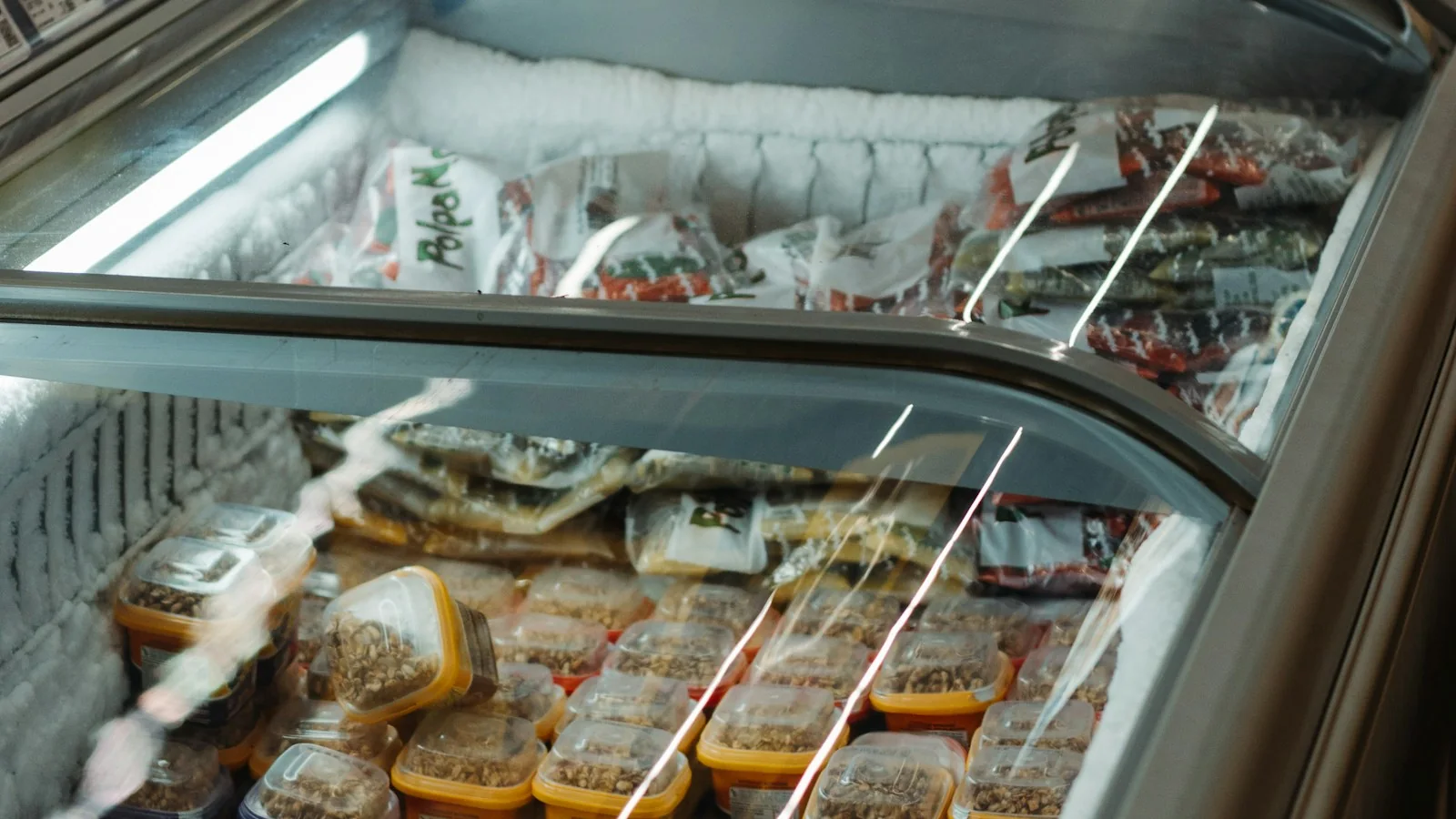
The photographs show ordinary supermarket refrigeration and are included for illustration. They do not depict a confirmed attack location, affected equipment, or food discarded during these incidents.
The feature photograph is by Eduardo Soares, published on Unsplash in 2020 under the Unsplash License. The inline photograph is by David Gomes, published on Pexels in 2019 under the Pexels License. Both are camera photographs. They have been resized or cropped and compressed for this page; no AI-generated imagery is used.
Common questions
Frequently Asked Questions
Were ordinary household refrigerators affected?
The incidents described here concern commercial refrigeration control systems. The reviewed reporting does not establish a general compromise of household refrigerators. Sweden’s public update gave no specific recommendations for members of the public.
Does an internet connection automatically make equipment unsafe?
No. The important questions are what is exposed, who can access it, whether the equipment is supported, and how the connection is protected. Remote access needs a security design appropriate to the equipment and its operational consequences.
Do these reports prove the refrigerators were physically destroyed?
No. The documented story includes disrupted refrigeration and discarded food. Those consequences should not be turned into an unsupported claim that every affected appliance suffered permanent hardware damage.
Further reading
Verified references
Sources & Methodology
Checked November 4, 2026. Incident context uses Reuters reporting and official notices; technical explanations and defensive recommendations use cybersecurity authority guidance. The article is an educational synthesis, not an independent forensic investigation, an equipment recovery procedure, or a food safety assessment. Sources are linked beside the relevant sections and below. No attacker identity or common exploit chain is asserted.
- Incident targeting remote refrigeration controllers: CERTFR-2026-ALE-012CERT-FR / ANSSI: Published October 12; recommendations updated October 16, 2026.
- Cyberattacks on connected freezer and refrigeration systemsSweden’s National Cyber Security Centre: November 2, 2026; Swedish-language notice.
- Cyberattacks on freezing and refrigeration systemsKrisinformation.se, Swedish authorities: November 3, 2026; English-language public update.
- Security Incidents Targeting Remote Refrigeration Controllers (PDF)Ireland’s National Cyber Security Centre: November 3, 2026; configuration, access, and equipment support guidance.
- Secure Connectivity Principles for Operational Technology (PDF)UK NCSC and international partners; hosted by the FBI: General guidance used for connectivity and engineering principles, not incident attribution.
- Considerations for organisations working with third-party ICS integratorsCISA and FBI: September 23, 2026 announcement and recommendations.
- European supermarkets rush to patch vulnerabilities after region-wide fridge hackReuters: November 3, 2026; reporting on the wider impact and retailers’ response.
A practical next step
Understand what your connected systems can change
Use this story to start a practical discussion about access, responsibility, and recovery. For refrigeration equipment, work with authorised service providers and consult the relevant official advisories.

About the author
Wayne Pastoral
Full-stack developer behind Conduit Code Labs, working across Shopify, WordPress, web applications, performance, accessibility, and integrations.
Learn more about WayneContinue reading
More from Work & Technology

Canva’s Restructure: What Developers Can Learn
What Canva’s 2026 restructure means, why fragmented ownership slows software teams, and practical lessons for developers and team leads.
Read article
St. Luke’s Mobile App Data Incident: What Developers Can Learn
What St. Luke’s disclosed about its mobile app data incident, what remains unknown, and practical lessons for developers building connected applications.
Read article
The Importance of Tone of Voice in Communication
How tone of voice shapes meaning, first impressions, and conversations, with research, TED talks, and practical examples for work and everyday life.
Read article
The Pomodoro Technique: How to Focus Better, Study Smarter, and Get More Done
A practical, research-backed guide to the Pomodoro Technique: how the 25/5 method works, what studies say about breaks and focus, and how to adapt it for studying, coding, writing, and deep work.
Read article
Why the Right Tools Matter at Work: AI, Automation, and the Small Utilities That Save Time
The right tools reduce repetitive work, shorten feedback loops, and create more room for judgment. Here is how AI, automation, and focused utilities can improve everyday work without turning the workflow into another problem.
Read article
Working From Home: What You Gain, What You Trade, and What Actually Works
Working from home can save time, improve flexibility, and create better conditions for focused work, but it can also blur boundaries and increase isolation. Here is what the research says and what makes remote work sustainable.
Read article