Earning Six Figures Is Not Enough Without a Financial System
A high income can create options, but financial security depends on cash flow, debt, savings, and the systems behind everyday money decisions.

A six-figure income sounds like a financial milestone, but income by itself does not guarantee stability. A person can earn well and still feel financially stretched when fixed obligations, revolving debt, lifestyle upgrades, and unplanned spending absorb most of the cash coming in. The more useful measure is not simply how much someone earns. It is how much flexibility remains after the bills are paid, how expensive the debt is, whether emergencies can be handled without borrowing, and whether the financial system is getting stronger over time.
The Six-Figure Milestone Can Be Misleading
Income is important. More income can make it easier to cover necessities, build savings, invest, support family, and recover from setbacks. But a large salary can also hide weak financial habits because there is enough cash flow to keep an expensive lifestyle running for longer.
The problem usually becomes visible when several commitments overlap: housing, transportation, subscriptions, installment plans, credit-card balances, insurance, family support, and everyday spending. Each item can look manageable on its own while the combined total leaves almost no room for error.
Financial security is therefore better understood as resilience, not status. A strong income helps, but the real question is whether the household can absorb an unexpected expense, a temporary loss of income, or a higher cost of living without immediately taking on more debt.
A high income creates capacity. A good financial system decides how much of that capacity is kept.
Cash Flow Matters More Than the Headline Number
Two people can earn the same amount and have completely different financial lives. One may have low fixed expenses, manageable debt, and consistent savings. The other may have a higher-cost lifestyle with most of the next paycheck already committed.
That is why monthly cash flow deserves more attention than salary alone. Useful questions include how much income is already allocated before the month begins, how much is lost to interest and fees, how much remains for savings, and whether irregular expenses are planned for or repeatedly pushed onto credit.
The Bangko Sentral ng Pilipinas places budgeting, saving, financial planning, and debt management at the center of its financial education materials. Those basics may sound less exciting than earning more, but they determine whether additional income becomes lasting financial progress.

A Monthly Payment Is Not the Same as Affordability
Modern borrowing makes expensive purchases feel smaller by translating them into monthly payments. That can be useful, but it can also distort the real cost of a decision.
A payment may fit this month's budget while still weakening the next twelve or twenty-four months. The better question is not only whether the payment can be made. It is whether the payment still leaves enough room for savings, emergencies, existing obligations, and normal life without requiring new borrowing.
This is also why total cost matters. Interest, processing fees, penalties, and the length of the repayment period can turn a comfortable-looking monthly amount into an expensive long-term commitment.
Affordable today does not always mean sustainable for the full term.

Credit Is a Tool, Not Additional Income
Credit cards and installment products can be useful for convenience, purchase protection, timing, and planned financing. Problems begin when available credit starts to feel like available income.
A credit limit says how much a lender is willing to extend, not how much a person can safely afford. Carrying a balance also changes the economics of future spending because interest can continue to accumulate while new purchases are added.
BSP consumer education materials specifically encourage cardholders to understand interest, fees, total cost, and repayment capacity before using credit. They also warn that paying only the minimum can keep debt outstanding for much longer and increase the total interest paid.
Lifestyle Creep Usually Happens Quietly
Lifestyle creep rarely arrives as one dramatic decision. It is usually a series of reasonable upgrades: a nicer place, a better car, more subscriptions, more frequent dining out, upgraded devices, easier delivery, and purchases that would once have required more thought.
None of those choices is automatically irresponsible. The risk appears when spending rises almost as quickly as income. A raise then improves the appearance of the lifestyle without meaningfully improving savings, debt levels, or financial resilience.
A useful rule is to let financial capacity grow faster than lifestyle. When income increases, some of the increase can improve quality of life while another portion strengthens savings, reduces expensive debt, or builds long-term assets.
Debt Can Make a Good Income Feel Small
Debt changes the purpose of future income. Money that has not been earned yet is already assigned to decisions made earlier.
This becomes especially expensive with revolving balances because interest can accrue while the principal declines slowly. The Consumer Financial Protection Bureau notes that many card issuers calculate interest using an average daily balance, which is why paying balances sooner generally reduces the amount of interest that can accumulate.
The OECD's 2026 Consumer Finance Risk Monitor also identifies high debt levels and limited income as important vulnerabilities for household financial well-being. The broader lesson is simple: earning more helps, but expensive debt can absorb a surprising amount of that advantage.

Build a System Before Chasing the Next Upgrade
Money management does not need to become a complicated spreadsheet with dozens of categories. A useful system can be simple as long as it is visible and repeatable.
The objective is to make the important decisions before discretionary spending happens. That means knowing the real monthly obligations, reserving money for non-monthly expenses, making debt payments intentionally, and giving savings a place in the budget instead of hoping something is left at the end.
- Track take-home income, not only gross salary.
- List fixed obligations and their actual due dates.
- Know every debt balance, interest rate, minimum payment, and repayment term.
- Keep a realistic category for irregular expenses such as repairs, annual fees, medical costs, and family events.
- Build an emergency buffer so every surprise does not become new debt.
- Pay more than the minimum on expensive revolving debt when the budget allows.
- Pause new borrowing while an existing debt plan is being repaired.
- Review the system after every major change in income or expenses.
A Debt Payoff Plan Should Be Boring and Predictable
The best debt plan is not necessarily the most aggressive plan on paper. It is the one that can be repeated every month without creating another financial emergency.
A payment target should be high enough to make meaningful progress but realistic enough that food, housing, transportation, insurance, and essential savings do not end up back on credit. When cash flow improves, extra payments can accelerate the plan.
For people struggling with card payments, both BSP consumer guidance and the CFPB recommend communicating with the financial institution instead of ignoring the problem. Depending on the lender and account, options may include a different payment arrangement, restructuring, or another form of assistance. Terms should always be compared using total repayment cost, not just the monthly payment.
Financial Progress Is Buying Back Future Cash Flow
Paying down debt is not visually exciting. There is no new object to show for the payment. The reward is a future month with fewer obligations.
Every balance that disappears releases cash flow. That money can then move toward an emergency fund, investments, a business, education, family goals, travel, or simply a less stressful monthly budget.
Seen this way, debt reduction is not only about removing a negative number. It is about recovering control over income that would otherwise remain committed to the past.
Every obligation that ends gives a future paycheck more freedom.
Earning More Still Matters. Keeping More Matters Too.
None of this is an argument against earning more. Income growth is powerful. It can shorten a debt payoff timeline, create better options, and make long-term goals possible.
But income works best when it is paired with a system that decides what happens next. Without that system, a raise can disappear into a larger lifestyle. With it, the same raise can improve resilience, reduce debt, increase savings, and create genuine flexibility.
The goal is not to look wealthy or to optimize every peso. It is to build enough control that money decisions become intentional rather than reactive.
A high income is an advantage. Financial security is what happens when that advantage is managed well.
Verified references
Sources & Methodology
This article is a general educational perspective on budgeting, credit, cash flow, and debt management. It is not individualized financial advice; lending terms, interest calculations, and suitable repayment strategies vary by person and provider.
- Financial Education Learning Modules and ToolsBangko Sentral ng Pilipinas: BSP learning modules covering financial planning, saving and budgeting, debt management, investing, fraud prevention, and consumer protection.
- Protect Your MoneyBangko Sentral ng Pilipinas: BSP consumer education guidance on responsible credit-card use, understanding interest and fees, repayment capacity, and avoiding minimum-payment-only habits.
- Consumer Finance Risk Monitor 2026OECD: OECD report examining financial consumer risks, including high debt levels, limited income, financial literacy, and pressures on household financial well-being.
- How does my credit card company calculate the amount of interest I owe?Consumer Financial Protection Bureau: General explanation of daily and average-daily-balance interest calculations and why earlier payments can reduce interest.
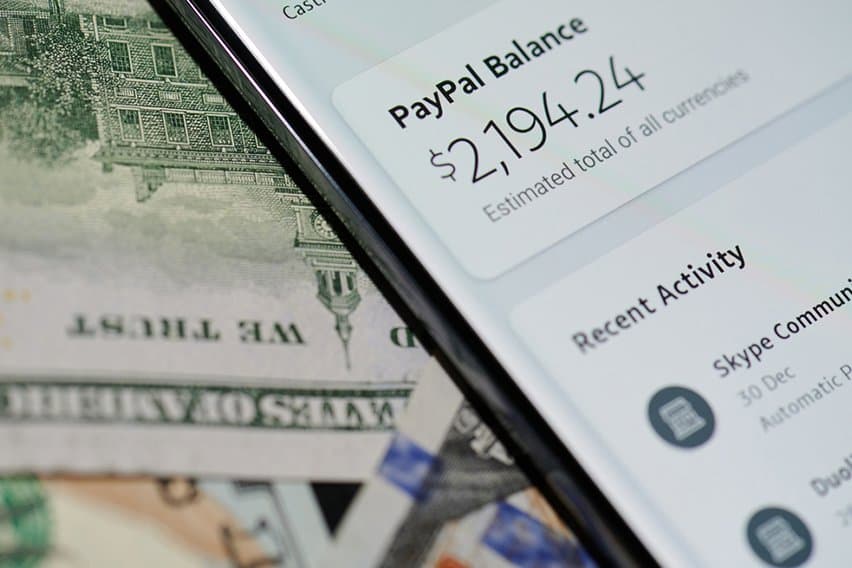
- PayPal Balance: What It Is And How to Check ItFreshBooks: Editorial image showing a PayPal balance of $2,194.24 alongside US dollar cash, used inside the article.
Clear answers before you plan
Frequently Asked Questions
Is a six-figure income enough to be financially secure?
Not by itself. Financial security depends on the cost of living, household size, debt, fixed obligations, savings, insurance, and how much cash-flow flexibility remains after essential expenses. The same income can produce very different outcomes for different households.
Should someone stop using credit cards while paying off debt?
Temporarily reducing or stopping new card spending can make a payoff plan easier to control, especially when a revolving balance is already accumulating interest. The right approach depends on the person's cash flow, essential expenses, and ability to avoid replacing card spending with another form of expensive borrowing.
Is paying only the minimum on a credit card enough?
Paying at least the required minimum is important for keeping the account current, but minimum-only payments can extend the repayment period and increase total interest. Paying more than the minimum generally reduces the balance faster when the budget allows.
Should debt be paid before building savings?
There is no single rule that fits every household. A small emergency reserve can reduce the risk of immediately borrowing again when an unexpected expense appears, while expensive debt may still deserve aggressive repayment. The balance depends on interest costs, income stability, insurance, and access to emergency cash.
A practical next step
Build systems that make progress repeatable
The same principle that improves good engineering applies to everyday life: make the important process visible, reduce unnecessary friction, and create a system that still works when conditions are not perfect.

About the author
Wayne Pastoral
Full-stack developer behind Conduit Code Labs, working across Shopify, WordPress, web applications, performance, accessibility, and integrations.
Learn more about WayneContinue reading
More from Life & Growth

Passion vs. Practicality: What Changing Careers Taught Me
How I moved from the electronics and electrical field into the tech industry, and what the change taught me about stability, curiosity, growth, and choosing a career direction that can last.
Read article
I Don’t Think We’re Getting Dumber. I Think We’re Losing the Habit of Thinking.
We spend our days reading, replying, searching, scrolling, watching, and asking. Our brains are rarely inactive, but being mentally occupied is not necessarily the same thing as thinking.
Read article
You Don’t Need to Have Your Career Figured Out Yet
You do not need a perfect career plan to make progress. A practical guide to changing direction, using transferable skills, and deciding what to try next.
Read article